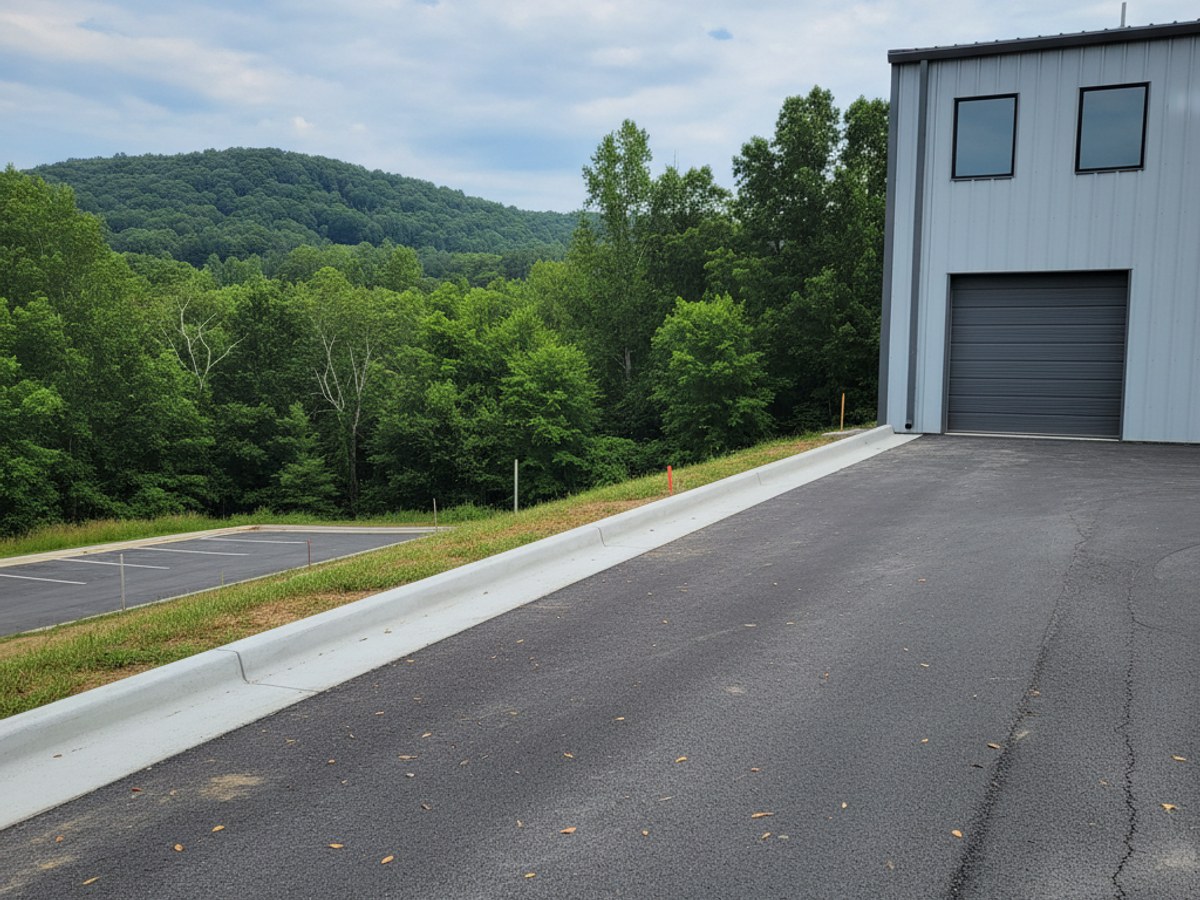
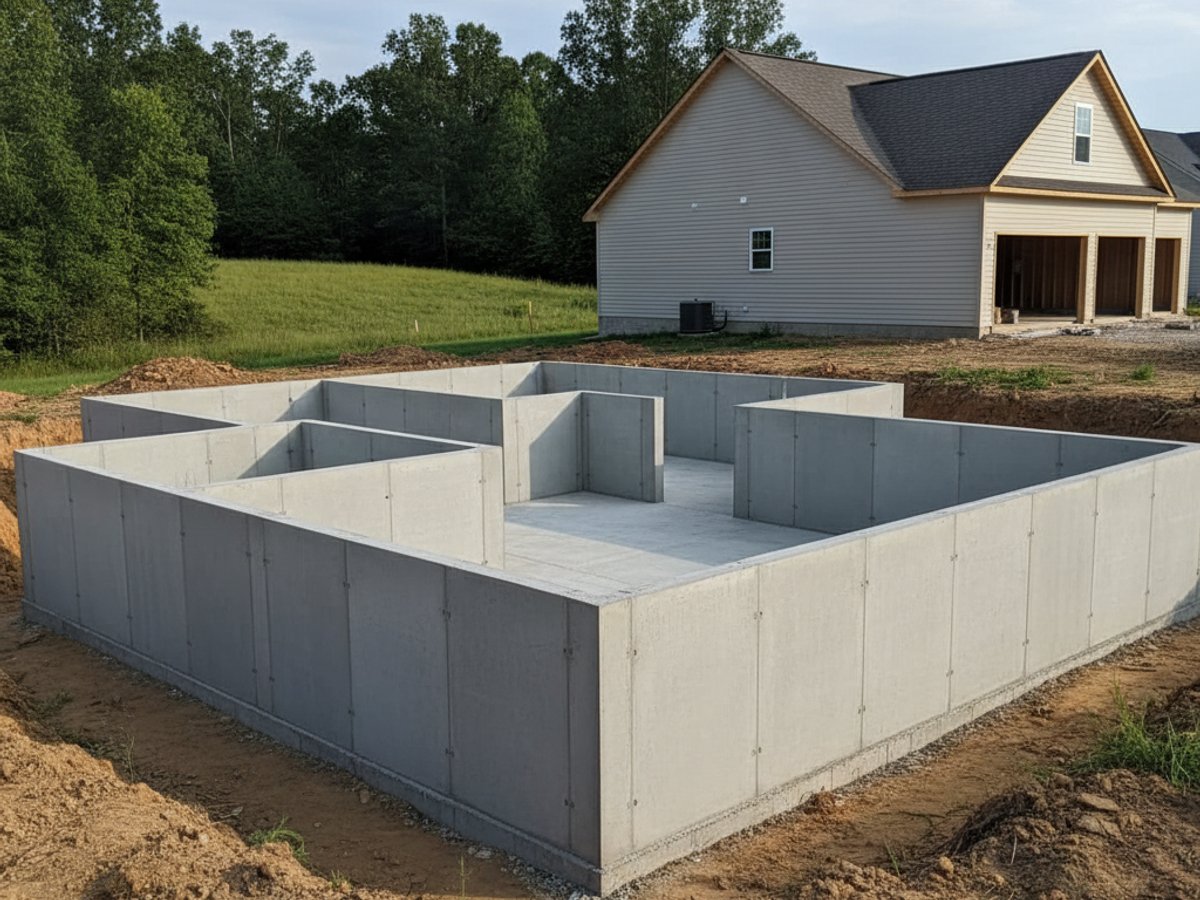
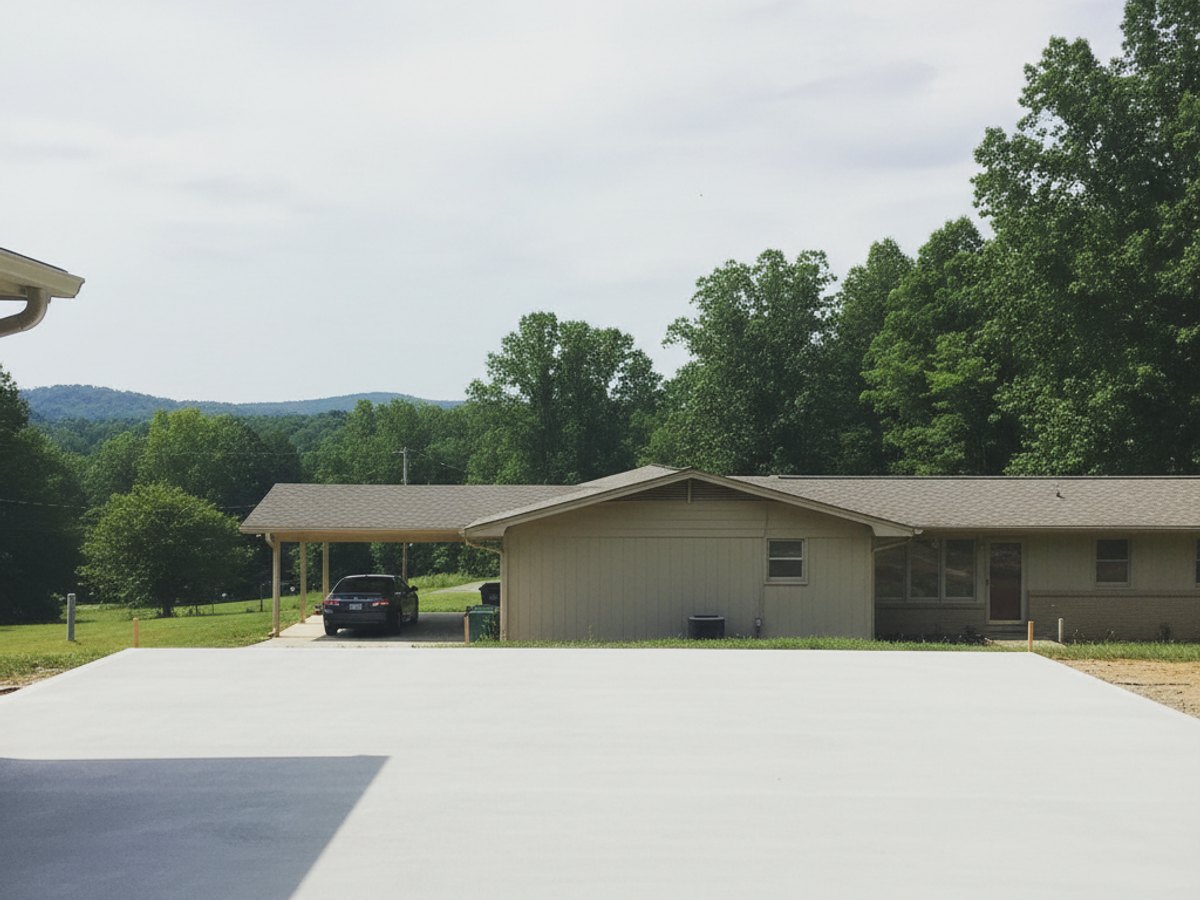
Every job below is one we do ourselves across Raleigh.
We pour driveways at least 4 inches thick, thicker if you're parking anything heavier than a pickup on it. Rebar or wire mesh gets tied in before the pour, and we saw-cut control joints within a day so the slab cracks along the joint instead of across your new driveway. Expect to keep vehicles off it for about a week while it cures.
A patio doesn't carry the load a driveway does, so we typically run 3.5 to 4 inches with mesh reinforcement. We talk through broom finish, exposed aggregate, or stamped texture before the pour, since the finish decides how the surface handles rain and bare feet in July. Control joints go in the same day to keep cracking predictable.
Stamped concrete gets its pattern pressed into the slab while the mix is still plastic, which means timing on pour day matters more than on a plain slab. We color it integrally or with a release agent, then seal it once cured so the color and texture hold up under sun and foot traffic. It costs more than a plain broom finish, but it replaces the look of pavers without individual joints for weeds to grow through.
Not every crack means the slab needs to come out. We patch surface spalling and popouts, mudjack or foam-lift a sunken section back to grade, and only recommend a full tear-out when the slab has broken into pieces or the subgrade underneath has failed. If a driveway's just got cosmetic cracking, we'll tell you that instead of selling you a new pour.
For a shed, garage, or addition, we lay out the slab to the dimensions the structure calls for, set a vapor barrier if the building will be conditioned space, and place rebar or mesh based on what's going on top of it. We check local building codes on thickness and reinforcement before the pour, not after the inspector shows up.
We pour sidewalks with a slight cross-slope so water runs off toward the yard instead of pooling in the middle. Control joints go in every 4 to 5 feet to match the slab width, which keeps a long run of sidewalk from cracking in a straight diagonal line across multiple panels.
Steps and porch slabs take a beating from foot traffic and the odd hard freeze, so we reinforce them and finish the tread surface with enough texture to stay grippy when it's wet. We match the rise and run to code so the steps don't feel off underfoot.
A pool deck sits in standing water and sun more than almost any other slab on your property, so we finish it with a broom or knockdown texture that stays slip-resistant when wet. We also slope it away from the pool coping so splash-out drains instead of sitting on the concrete.
On a sloped lot, a retaining wall holds the soil back so it doesn't wash out onto a patio or driveway after a hard rain. We build with poured concrete or block depending on wall height and the load behind it, and we always work in drainage so water pressure doesn't build up and push the wall over.
If a driveway or patio is structurally sound but the surface is worn, pitted, or stained, we can resurface it with a bonded overlay instead of tearing it out. It won't fix a slab that's cracked through or settled unevenly, but for surface wear it's a cheaper fix than a full replacement.
Four steps, and no surprises in any of them.
You tell us what you want doing, we look at what is actually there, and we ask the awkward questions early.
In writing, itemised, free. If something might add cost later we flag it now rather than at the end.
Same crew throughout. We cover your floors, keep the dust down and tidy up before we leave each day.
You point out anything you are not happy with and we fix it before the invoice, not after.
Site conditions vary town to town, and our crew has poured in most of them.
The questions that come up once a concrete project actually gets underway.
Describe the problem and we will tell you what it probably is. No obligation.